
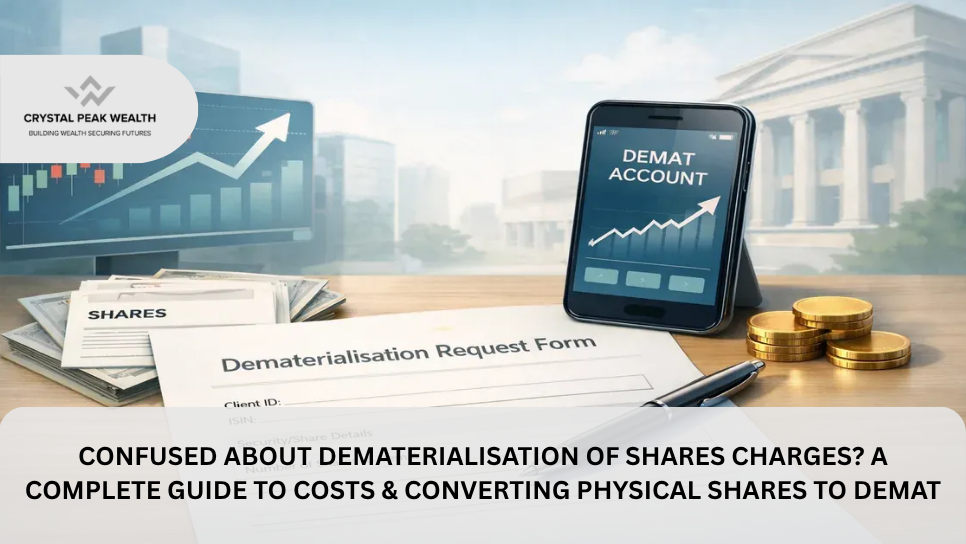
Dematerialisation of shares charges are the fees investors pay when converting physical share certificates into electronic form. They usually include processing, service, and courier charges—ranging between ₹100 and ₹500 per certificate depending on the broker or depository participant. Dematerialisation not only simplifies ownership but also ensures safer, faster, and paperless trading. It’s a core part of SEBI’s digital initiative, transforming India’s stock market into a completely electronic ecosystem for secure and transparent investing.
Why Converting to Digital Matters
Converting your physical shares into a digital format isn’t just a regulatory formality—it’s a necessity for efficient wealth management. Here’s why dematerialisation of shares charges and the entire process matter:
- Eliminates the risk of theft, forgery, and paper loss.
- Ensures compliance with SEBI’s mandate for paperless trading.
- Enables instant transfers, faster settlements, and easy online trading.
- Reduces paperwork and storage burden.
- Facilitates transparent portfolio tracking.
- Simplifies loans against shares and corporate benefits.
- Adds long-term security and liquidity to your investments.
The Shift from Physical to Digital – Why India is Going Paperless
Over the last decade, the Indian stock market has undergone a dramatic shift. Regulators like SEBI have consistently pushed for a complete move from physical share certificates to digital holdings. Yet, surprise remains—millions of investors across India still have old paper share certificates tucked away in drawers, waiting to be converted.
The government and stock exchanges have even aligned with this transition, with ongoing campaigns encouraging dematerialisation. Despite these efforts, confusion persists—especially around dematerialisation of shares charges, hidden broker fees, and the paperwork involved. That’s where understanding each step becomes essential.
What Is Dematerialisation of Shares?
Meaning of Dematerialisation
Dematerialisation (or “demat”) simply means converting physical paper share certificates into electronic form. Instead of holding paper documents, your ownership records are stored digitally with a Depository Participant (DP) under NSDL or CDSL. Every share you own becomes a secure digital entry in your Demat account.
Why Dematerialisation Is Important
Before demat accounts came into play, investors faced endless hurdles—lost certificates, delays in transfers, and signature mismatches. With dematerialisation:
- Share transfers happen in seconds.
- Fraud and forgery risks disappear.
- Holdings remain stored safely and indefinitely.
- SEBI compliance becomes automatic.
The benefits far outweigh the dematerialisation of shares charges, which are minor compared to the convenience.
Physical Shares vs Demat Shares
Feature | Physical Shares | Demat Shares |
Format | Paper certificate | Electronic record |
Security | Prone to theft/damage | Fully protected |
Trading | Manual transfer | Online instant transfer |
Costs | Stamp duties, courier charges | Minimal digital fees |
Management | Difficult to track | One-click portfolio access |
The table above shows why more investors are converting to demat every year. The small dematerialisation of shares charges you pay are truly an investment in future convenience.
Dematerialisation of Shares Charges Explained
To understand what you’re really paying, here’s a breakdown of all the typical dematerialisation of shares charges an investor should know.
Typical Charges Investors Should Know
- Dematerialisation request fee: Charged when you submit a new DRF request.
- Processing fee: Covers handling and verification of your documents.
- Courier/documentation fee: For transporting and validating physical certificates.
- Stamp duty: In rare cases, for specific transfers or legacy holdings.
Average Cost Range in India
On average, dematerialisation of shares charges range from ₹100 to ₹500 per certificate. Some brokers charge higher for older or multiple share certificates, while others offer bundled pricing for bulk conversions. Always cross-check their fee sheet before proceeding.
Why Charges Differ Between Brokers
Not all DPs operate equally. Differences arise due to:
- Unique service fee structures.
- Backend DP partnerships (NSDL or CDSL).
- Labor and logistical costs.
- Volume of documents handled.
For instance, one DP might charge ₹200 flat, while another bills per certificate. Understanding this prevents bill shock later.
Hidden Costs Investors Often Miss
Apart from standard dematerialisation of shares charges, you might also encounter:
- Account opening fees.
- Annual Maintenance Charges (AMC).
- Additional verification or courier re-attempt costs.
- KYC update costs.
Being aware of these ensures your actual conversion remains transparent and affordable.
How to Dematerialise Shares (Step-by-Step Process)
Transitioning to a digital account sounds complex but is actually straightforward when done correctly. Below is the entire process explained in steps, with details connecting each stage of your conversion.
Step 1: Open a Demat Account
Choose a SEBI-authorised Depository Participant associated with NSDL or CDSL. Compare their dematerialisation of shares charges, processing times, and reputation. Once you submit your ID, address proof, and PAN, your account is set up.
Step 2: Fill the Dematerialisation Request Form (DRF)
After your account is live, fill out the DRF provided by your DP. Each physical certificate needs its own DRF form. Clearly write your name (as on record), ISIN number, and folio number.
Step 3: Submit Physical Share Certificates
Attach original share certificates with the DRF. Mark “Surrendered for Dematerialisation” on each certificate before submission to prevent misuse. Check for signature consistency with your share records.
Step 4: Verification by Depository
Your DP verifies your documents and forwards them to the registrar or transfer agent (RTA). This verification ensures your holdings are legitimate and match company records—a critical step to avoid rejection.
Step 5: Shares Credited to Demat Account
Once verification is complete, your shares are electronically credited to your Demat account. The process takes about 2–4 weeks. The only real cost here? The dematerialisation of shares charges, which you’d have already paid upfront.
How to Dematerialise Physical Shares Safely
Even though most brokers facilitate conversion easily, investors often face delays due to missing documents or mismatched data. Here’s how to avoid setbacks.
Documents Required
Before applying, ensure you have:
- PAN card copy
- Aadhaar or government ID proof
- Demat account details
- Original physical certificates
- Signed DRF
Incomplete submissions cause the majority of delays, often resulting in additional dematerialisation of shares charges for resubmission.
Verification Process by Depositories
The DP checks authenticity, compares signatures, and confirms records with the issuing company’s registrar. If approved, the registrar updates the digital record and informs the depository to credit your account electronically.
Timeline for Conversion
Typically, the conversion takes 2 to 4 weeks depending on broker efficiency and verification times. Some cases (like old or damaged certificates) might take up to 6 weeks. Patience pays off here—especially when your end result is a secure, liquid digital holding.
Example: How to Convert Physical Shares to Demat
Let’s see a real-world example to tie the process together.
Investor: Rahul Sharma
Holding: 50 paper shares purchased in 2005.
Process:
Rahul opened a demat account with a SEBI-authorised DP and submitted his DRF with the original certificates. His broker processed the application, verified details with the registrar, and within three weeks, the shares reflected in his demat account.
Estimated Charges:
- Processing fee: ₹200
- DP service fee: ₹150
Total dematerialisation of shares charges: ₹350
Outcome: His shares became digital, tradable, and safe—no paper, no risk.
This example shows that a simple ₹350 investment can unlock liquidity worth thousands. The convenience and safety make the dematerialisation of shares charges worth every rupee.
Common Mistakes Investors Make During Dematerialisation
Avoid these common pitfalls to prevent rejection or extra costs:
- Signature mismatch: Ensure your signature matches the company’s old records.
- Damaged or incomplete certificates: Get replacements before applying.
- Incorrect DRF details: Even one wrong folio number delays processing.
- Ignoring additional broker fees: Ask for a summary of dematerialisation of shares charges upfront.
- Not updating KYC: Your KYC must match the current ID and address information.
A small attention to detail can save weeks of delays and duplicate expenses.
How to Avoid Extra Dematerialisation Charges
No investor likes hidden costs. Follow these preventive measures to keep your conversion cost-effective:
- Compare Depository Participants (DPs): Check fee lists and processing times.
- Understand Fee Structure: Ask if dematerialisation of shares charges include courier or document handling fees.
- Verify Documentation: Double-check every field on your DRF and ID proofs.
- Use Official Platforms: Choose authorised, verified brokers to avoid scams.
- Track Your Request: Always ask for a reference number to follow up smoothly.
Checking these simple details can reduce your total cost by nearly 40%.
Benefits of Converting Physical Shares to Demat
Every investor wonders—why go through the hassle? The advantages are clear, especially considering how small dematerialisation of shares charges are against the long-term gains.
Secure Storage
Digital shares are stored safely with depositories, eliminating theft, damage, or misplacement risk.
Faster Trading & Transfers
No waiting weeks for transfer approvals—digital transactions happen instantly.
Easy Portfolio Tracking
Monitor your entire investment portfolio online through apps or DP platforms.
Compliance with Regulations
As per SEBI guidelines, trading in physical shares has been discontinued. Only dematerialised shares can be traded.
No Risk of Fake Certificates
Demat accounts maintain verified authenticity records, ensuring no duplication or fake holdings.
Simplified Record-Keeping
Your entire transaction history is tracked, downloadable, and transferable.
At Crystal Peak Wealth, we often explain to clients that the minimal dematerialisation of shares charges are a gateway to fully digital investing freedom.
Our Solution – Simple Dematerialisation Support by Crystal Peak Wealth
Many investors feel intimidated by the forms, verification process, and unknown broker fees. That’s why Crystal Peak Wealth offers an easier route.
End-to-End Assistance
From checking your old share certificates to coordinating with DPs and registrars, our team handles everything. We guide you through each step, keeping your documentation secure.
Transparent Fee Structure
No more guessing games—our dematerialisation of shares charges include every component upfront. You pay one consolidated fee, fully itemized before conversion begins.
Faster Processing
Our tie-ups with reliable DPs ensure faster handling and real-time status updates.
Personalized Investor Guidance
We help with DRF form filling, signature verifications, and KYC updates—ensuring your conversion happens on time and without stress.
Need help to convert physical shares to demat quickly and affordably?
At Crystal Peak Wealth, we make it seamless. Our experts ensure transparent dematerialisation of shares charges and a 100% secure process from start to finish.
Final Thoughts
In today’s digital-first market, dematerialisation isn’t optional—it’s essential. Knowing exactly what you’re paying in dematerialisation of shares charges ensures transparency and prevents future confusion. Whether you hold a few old paper shares or a large portfolio, converting them to digital format guarantees safety, compliance, and flexibility.
At Crystal Peak Wealth, we simplify this journey—offering expert handling, transparent pricing, and faster processing. With proper guidance, you can unlock your shares’ real value securely and smartly.
The transition from paper to digital marks not just a regulatory shift, but a mindset one—a movement toward smarter, safer investing. So take that first step today, convert your physical shares, and let your investments breathe in the digital era.
Frequently Asked Questions (FAQs)
They vary between ₹100 and ₹500 per certificate, depending on your DP and broker services.
You can approach a registered Depository Participant directly and submit your DRF and certificates.
Most DPs allow partial online initiation, but physical certificates still need physical submission for verification.
Yes, as long as the company is active and listed, old shares remain valid for dematerialisation.
Typically 2–4 weeks, depending on document verification and RTA response time.
Yes, SEBI mandates that only dematerialised shares are tradable in the stock market.
You cannot trade, sell, or transfer them, restricting liquidity and ownership transfer.
Your PAN, Aadhaar or ID proof, Demat account details, and original share certificates.